
The Complete Guide to Tempered Glass Panel Technology in 2026
Leave a message
Introduction
In 2026, Tempered Glass Panel technology has become a core material standard across modern industrial systems, consumer electronics, automotive displays, medical equipment, and smart infrastructure. As devices become thinner, more interactive, and more durable, the need for protective front glass with high mechanical strength and optical clarity continues to grow.
A Tempered Glass Panel is no longer just a protective cover. It is now an integrated functional layer that directly affects display performance, touch responsiveness, safety reliability, and product lifespan. In TFT LCD Display modules, industrial control panels, and smart touch systems, tempered glass plays a critical role in balancing durability and visual quality.
Compared with standard annealed glass, a Tempered Glass Panel provides significantly higher impact resistance, better thermal stability, and safer breakage behavior. When broken, it fractures into small blunt particles instead of sharp shards, reducing the risk of injury. This safety feature alone makes it widely used in high-risk environments such as industrial automation systems, automotive dashboards, and public kiosks.
At the same time, modern manufacturing technologies have expanded the functionality of Tempered Glass Panel products. Surface treatments such as anti-glare (AG), anti-reflective (AR), and anti-fingerprint (AF) coatings improve usability in different lighting and environmental conditions. Optical bonding integration with TFT LCD Display systems further enhances readability and durability.
This guide provides a complete technical and industry overview of Tempered Glass Panel technology in 2026, including its structure, manufacturing process, types, applications, and future development trends.
What Is a Tempered Glass Panel and How It Works
Definition of Tempered Glass Panel
A Tempered Glass Panel is a type of safety glass that has been strengthened through controlled thermal or chemical treatment. The process increases internal stress resistance, making the glass several times stronger than standard float glass.
Unlike ordinary glass, which breaks into large sharp pieces, a Tempered Glass Panel is designed to shatter into small granular fragments. This controlled breakage behavior significantly improves safety in both consumer and industrial applications.
In modern display systems, the Tempered Glass Panel also acts as a functional optical layer. It protects TFT LCD Display modules and touch sensors from impact, dust, scratches, and environmental damage while maintaining high transparency and light transmission.
How Tempered Glass Panel Is Strengthened
There are two primary strengthening methods used in modern Tempered Glass Panel production: thermal tempering and chemical strengthening.
Thermal tempering involves heating the glass to extremely high temperatures, typically around 600–700°C, followed by rapid cooling using high-pressure air. This process creates compressive stress on the surface and tensile stress inside the glass core. The result is a material that is highly resistant to impact and bending forces.
Chemical strengthening uses an ion-exchange process, where smaller sodium ions in the glass surface are replaced by larger potassium ions. This creates a compressed surface layer that significantly increases mechanical strength without changing the glass thickness.
Both methods improve durability, but chemical strengthening is often used in high-precision applications such as TFT LCD Display cover glass due to its superior optical and dimensional stability.
Key Functional Characteristics
The performance of a Tempered Glass Panel is defined by several key characteristics.
High impact resistance allows it to withstand physical shocks in industrial and public environments. High bending strength ensures structural stability even under mechanical stress.
Thermal resistance enables operation in environments with rapid temperature changes, making it suitable for automotive and outdoor systems.
Scratch resistance helps maintain optical clarity over long-term use, especially in touch-enabled systems where frequent user interaction occurs.
Most importantly, the safety fracture pattern of a Tempered Glass Panel reduces injury risk, making it the preferred choice for human-facing interfaces.
Manufacturing Process of Tempered Glass Panel
Raw Glass Selection
The production of a high-quality Tempered Glass Panel begins with selecting premium float glass. Optical clarity, chemical purity, and thickness uniformity are critical factors.
Any impurities or internal defects in the base glass can significantly reduce final strength after tempering. For TFT LCD Display applications, ultra-clear glass is often required to ensure maximum light transmission.
Cutting and Edge Processing
Before tempering, the glass must be precisely cut into the required shape using CNC equipment. Once tempered, glass cannot be cut or modified, making this stage extremely important.
Edge processing includes grinding, polishing, and chamfering. Smooth edges help distribute stress evenly across the panel and reduce the risk of cracking.
For industrial-grade Tempered Glass Panel products, edge quality is a key factor affecting durability and safety performance.
Tempering Process
In thermal tempering, the glass is heated in a furnace to approximately 600–700°C until it becomes soft. It is then rapidly cooled using high-pressure air jets.
This rapid cooling locks the outer surface into a state of compression while the inner core remains in tension. This internal stress balance is what gives a Tempered Glass Panel its high strength.
Strict control of temperature uniformity and cooling speed is essential. Any inconsistency can lead to optical distortion or reduced mechanical performance.
Post-Processing Treatments
After tempering, additional processing is applied depending on application requirements.
Surface coatings such as AG, AR, and AF improve usability in different lighting and environmental conditions. Silk printing is used for branding, interface markings, or decorative purposes.
Hole drilling, if required, must be completed before tempering to avoid structural failure.
Finally, each Tempered Glass Panel undergoes strict inspection for flatness, optical distortion, and stress distribution.
Types of Tempered Glass Panel Technologies
Thermal Tempered Glass Panel
Thermal tempered glass is the most widely used type. It offers a strong balance between cost and performance.
It is commonly used in industrial equipment, commercial displays, and general-purpose protective applications. Its strength and safety characteristics make it suitable for most standard environments.
Chemical Strengthened Tempered Glass Panel
Chemical strengthening provides higher surface compression strength compared to thermal tempering.
This type is widely used in high-end electronic devices, including TFT LCD Display modules, where thin glass and high optical clarity are required.
It is particularly suitable for applications requiring precision and minimal optical distortion.
Coated Tempered Glass Panel
Coated versions include AG, AR, and AF treatments.
AG coatings reduce reflections and improve visibility under strong lighting. AR coatings enhance light transmission and contrast. AF coatings reduce fingerprint contamination, improving cleanliness in touch applications.
These coatings are widely used in TFT LCD Display systems and industrial touch panels.
Laminated Tempered Glass Panel
Laminated structures combine multiple glass layers with interlayer films such as PVB or EVA.
This design improves safety, sound insulation, and impact resistance. Even when broken, the fragments remain attached to the interlayer, preventing scattering.
Laminated Tempered Glass Panel products are widely used in automotive and architectural applications.
Customized Industrial Tempered Glass Panel
Industrial applications often require customized glass solutions.
These include specific shapes, thicknesses, hole positions, color printing, and functional markings. Integration with TFT LCD Display and touch modules is also common.
OEM customization ensures compatibility with different device architectures and environmental requirements.
Applications of Tempered Glass Panel in Modern Industry
TFT LCD Display and Touch Screen Systems
One of the most important applications of Tempered Glass Panel is in TFT LCD Display and touch screen systems.
It serves as the outer protective layer, shielding the display from impact, scratches, and environmental damage while maintaining optical clarity.
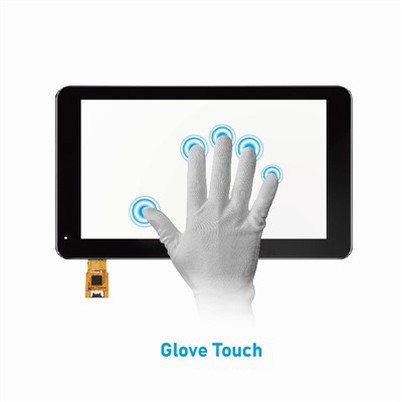
In capacitive touch systems, the glass also acts as the touch interface surface, enabling smooth user interaction.
Optical bonding between Tempered Glass Panel and TFT LCD Display further improves brightness, contrast, and durability.
Industrial Automation and Control Systems
Industrial environments require robust and durable materials.
Tempered Glass Panel is widely used in machine control panels, HMI systems, and automation interfaces. These systems must operate reliably under dust, vibration, and temperature fluctuations.
The glass ensures long-term durability while maintaining clear visibility of control information.
Automotive Applications
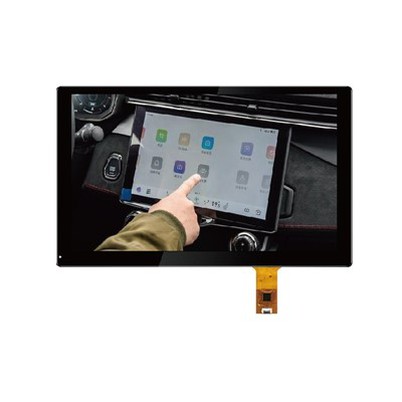
In automotive systems, Tempered Glass Panel is used in dashboards, infotainment systems, and navigation displays.
It must withstand vibration, temperature extremes, and long-term mechanical stress.
Its optical clarity and strength make it ideal for modern digital cockpit designs.
Medical Equipment
Medical devices require high safety and cleanliness standards.
Tempered Glass Panel provides a smooth, chemically resistant surface that is easy to clean and disinfect. It is used in diagnostic monitors, patient interfaces, and laboratory equipment.
Smart Retail and Outdoor Displays
Public-facing systems require vandal-resistant and weather-resistant materials.
Tempered Glass Panel is widely used in kiosks, digital signage, and interactive advertising systems.
Combined with high-brightness TFT LCD Display modules, it ensures visibility and durability in outdoor environments.
Future Trends in Tempered Glass Panel Technology
Ultra-Thin Glass Development
The demand for thinner and lighter devices is driving the development of ultra-thin Tempered Glass Panel solutions.
However, reducing thickness while maintaining strength remains a technical challenge.
Smart Functional Glass
Future Tempered Glass Panel designs will integrate more functional layers, including touch sensors and display technologies.
This will enable fully interactive glass surfaces in smart devices and industrial systems.
Advanced Surface Engineering
Nano-coatings and advanced surface treatments will improve scratch resistance, self-cleaning ability, and optical performance.
These technologies will further enhance usability in TFT LCD Display applications.
Sustainable Manufacturing
Environmental considerations are becoming increasingly important.
Manufacturers are focusing on energy-efficient tempering processes and recyclable glass materials to reduce environmental impact.
Conclusion
The Tempered Glass Panel has evolved from a simple protective material into a critical functional component in modern electronic and industrial systems.
Its combination of high strength, safety performance, and optical clarity makes it essential for TFT LCD Display systems, touch interfaces, automotive electronics, and industrial control applications.
With continued advancements in surface engineering, optical integration, and manufacturing precision, Tempered Glass Panel technology will play an even more important role in future display and smart device ecosystems.
In 2026 and beyond, the demand for stronger, thinner, and more functional glass solutions will continue to grow, ensuring that Tempered Glass Panel remains a foundational material in global industrial innovation.