
How TFT LCD Touch Screens Work: Structure, Types, and Applications
Leave a message
Introduction
The TFT LCD Touch Screen has become a core interface technology in modern electronic systems. From industrial control panels and medical devices to automotive dashboards, smart retail kiosks, and consumer electronics, this integrated display and interaction solution is now widely adopted across almost every industry that requires human-machine interaction.
At its core, a TFT LCD Touch Screen combines two essential technologies: TFT LCD (Thin-Film Transistor Liquid Crystal Display) for visual output and a touch sensing system for user input. This combination allows users to directly interact with displayed content, replacing traditional buttons, keyboards, and mechanical controls with a more intuitive and flexible interface.
In 2026, the demand for TFT LCD Touch Screen solutions continues to increase due to several key trends: higher display resolution requirements, growing demand for multi-touch functionality, increasing use of embedded systems, and rising expectations for durability in industrial environments. At the same time, industries are moving toward smarter, more connected devices, where touch interfaces play a central role in system operation.
Understanding how a TFT LCD Touch Screen works requires examining its structure, operating principles, different technology types, and application scenarios. This article provides a complete technical overview of TFT LCD Touch Screen systems, including their internal architecture, working mechanism, manufacturing principles, and real-world usage across industries.
What Is a TFT LCD Touch Screen and How It Works
Definition of TFT LCD Touch Screen
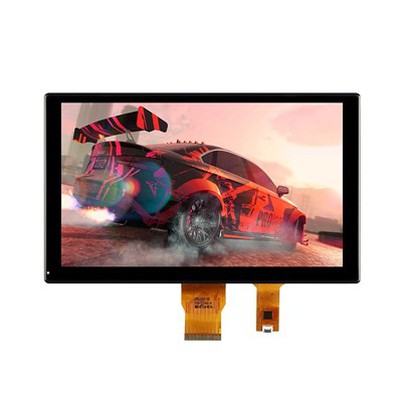
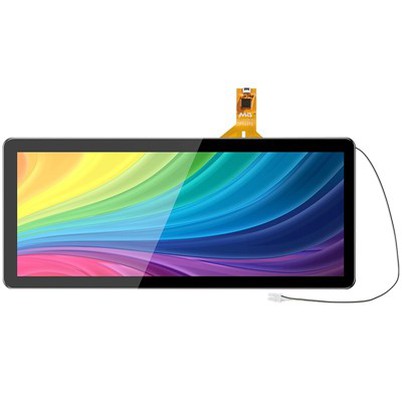
A TFT LCD Touch Screen is a display module that integrates a TFT LCD panel with a touch sensing layer. The TFT LCD provides high-quality visual output using liquid crystal technology controlled by thin-film transistors, while the touch layer detects user input through capacitive or resistive sensing methods.
Unlike traditional displays that only show images, a TFT LCD Touch Screen enables direct interaction. Users can tap, swipe, zoom, and drag elements directly on the screen surface, making it an essential interface for modern electronic systems.
In most modern applications, capacitive technology-especially projected capacitive (PCAP)-is used because it supports multi-touch functionality, high transparency, and long operational durability.
Basic Working Principle
The operation of a TFT LCD Touch Screen can be divided into two main systems: display generation and touch detection.
The TFT LCD display works by controlling light transmission through liquid crystals. Each pixel is controlled by a thin-film transistor that adjusts the orientation of liquid crystal molecules. A backlight unit provides constant illumination, and the liquid crystals regulate how much light passes through color filters to create images.
The touch system works independently but synchronizes with the display. In capacitive systems, a grid of conductive electrodes creates an electrostatic field. When a finger touches the screen, it disturbs this field, allowing the controller to calculate the exact touch coordinates.
These coordinates are then sent to the system processor, which interprets the input as commands such as selecting an icon, scrolling a page, or controlling a machine interface.
Human-Machine Interaction Flow
When a user interacts with a TFT LCD Touch Screen, the process follows a structured flow:
First, the user physically touches the screen surface. The touch sensor layer detects the position and intensity of the input. Next, the touch controller IC processes the signal and converts it into digital coordinates. These coordinates are transmitted to the operating system or embedded controller via interfaces such as USB, I2C, or SPI.
Finally, the system executes the corresponding action on the display interface. This entire process occurs in milliseconds, enabling smooth and real-time interaction.
Structure of a TFT LCD Touch Screen
Main Structural Layers
A TFT LCD Touch Screen is composed of multiple layered components working together:
The top layer is the cover glass, which provides physical protection and surface durability. It often includes surface treatments such as anti-glare (AG), anti-reflective (AR), or anti-fingerprint (AF) coatings.
Below the cover glass is the touch sensor layer, which detects user input. In capacitive systems, this layer is made of transparent conductive materials such as ITO (Indium Tin Oxide).
Under the touch layer is the TFT LCD panel, responsible for image generation. It contains liquid crystal cells, color filters, and thin-film transistor arrays.
The backlight unit is located at the bottom of the structure. It provides uniform illumination using LED light sources.
Between these layers, optical bonding or air bonding is used to assemble the module, influencing optical clarity and durability.
Capacitive Touch Structure (PCAP)
Projected capacitive (PCAP) technology is the most widely used touch solution in modern TFT LCD Touch Screen systems. It uses a grid of X-axis and Y-axis electrodes to form an electrostatic field.
When a finger approaches or touches the screen, it changes the capacitance at a specific point. The system detects this change and calculates the exact touch position.
PCAP systems support multi-touch input, allowing users to perform gestures such as zooming, rotating, and multi-finger control. This makes it suitable for smartphones, industrial HMI systems, and interactive kiosks.
The structure is highly transparent, durable, and resistant to surface wear, making it ideal for long-term use.
Resistive Touch Structure
Resistive touch technology uses pressure-sensitive layers instead of electrostatic fields. It consists of two flexible conductive layers separated by micro spacers.
When pressure is applied, the layers make contact, creating a voltage change that is converted into coordinates.
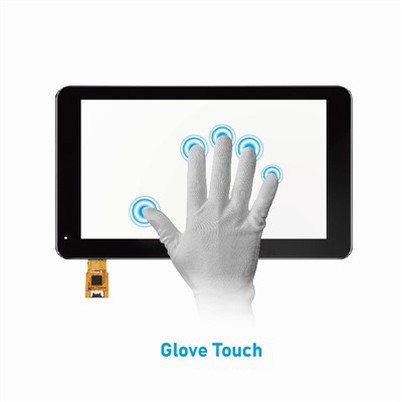
Although resistive systems are less common in modern consumer devices, they are still widely used in industrial environments due to their ability to operate with gloves, styluses, and in harsh conditions.
However, they typically offer lower transparency, reduced durability, and limited multi-touch capability compared to capacitive systems.
Optical Bonding vs Air Bonding
Air bonding uses a simple adhesive or frame structure to connect display layers, leaving a visible air gap between components. This can cause light reflection, reduced contrast, and lower outdoor readability.
Optical bonding, on the other hand, fills the gap between layers with a transparent optical adhesive. This eliminates internal reflections and significantly improves display clarity.
Optical bonding also enhances shock resistance, moisture protection, and durability. It is widely used in industrial, automotive, and outdoor TFT LCD Touch Screen applications where reliability is critical.
Types of TFT LCD Touch Screen Technologies
Capacitive TFT LCD Touch Screen
Capacitive TFT LCD Touch Screen systems dominate modern electronics. They use electrostatic sensing to detect touch input and support multi-touch functionality.
Projected capacitive technology allows precise touch detection even with thin protective glass layers. It also supports advanced gestures, making it ideal for interactive applications.
These systems are widely used in smartphones, tablets, industrial control panels, and smart retail displays.
Resistive TFT LCD Touch Screen
Resistive TFT LCD Touch Screen systems rely on physical pressure to register input. They are highly compatible with different input methods, including gloves and styluses.
This makes them suitable for industrial environments, particularly where cost efficiency and operational flexibility are important.
However, they are gradually being replaced in high-end applications due to lower optical performance and limited multi-touch capability.
IPS TFT LCD Touch Screen
IPS (In-Plane Switching) TFT LCD Touch Screen technology improves viewing angles and color accuracy by aligning liquid crystal molecules in parallel to the display plane.
This ensures consistent image quality even when viewed from different angles.
IPS-based TFT LCD Touch Screens are widely used in medical devices, industrial monitors, and high-end consumer electronics where visual clarity is critical.
High Brightness Outdoor TFT LCD Touch Screen
High brightness TFT LCD Touch Screens are designed for outdoor or high-light environments. They use enhanced LED backlight systems and optical treatments to improve visibility under sunlight.
Combined with anti-glare coatings and optical bonding, these screens maintain readability even in challenging lighting conditions.
They are commonly used in transportation systems, outdoor kiosks, and industrial field equipment.
Customized Industrial TFT LCD Touch Screen
Industrial applications often require customized TFT LCD Touch Screen solutions. These include waterproof designs, wide temperature support, glove-touch functionality, and EMI shielding.
OEM customization also includes interface adaptation such as HDMI, LVDS, MIPI, and USB, depending on system requirements.
Manufacturing and Key Technologies Behind TFT LCD Touch Screens
TFT LCD Panel Manufacturing
The TFT LCD manufacturing process involves multiple precision steps. Thin-film transistors are deposited onto glass substrates, followed by liquid crystal injection, alignment, and sealing.
Color filters and polarizers are then applied to complete the display structure. Each step requires strict quality control to ensure uniform brightness and color accuracy.
Touch Sensor Fabrication
Touch sensors are created using ITO coating and etching processes. These transparent conductive patterns form the basis of capacitive touch detection.
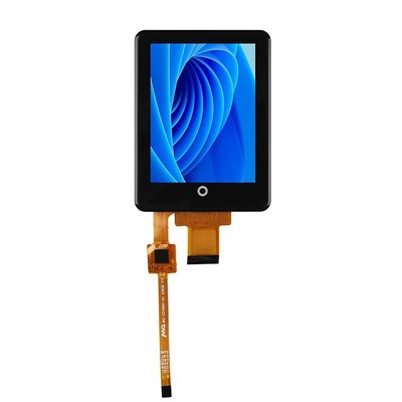
Flexible printed circuits (FPC) are attached to transmit signals to the controller IC.
Surface Treatment Technologies
Surface treatments play an important role in improving user experience. Anti-glare coatings reduce reflections, anti-reflective coatings improve clarity, and anti-fingerprint coatings enhance cleanliness and usability.
Chemical strengthening processes are also applied to improve glass durability and impact resistance.
Controller and Signal Processing
The touch controller IC is responsible for interpreting touch signals and converting them into usable data. It filters noise, improves accuracy, and ensures stable multi-touch performance.
Modern controllers support multiple operating systems including Windows, Linux, and Android, making TFT LCD Touch Screen systems highly versatile.
Applications of TFT LCD Touch Screen Technology
Industrial Automation and HMI Systems
Industrial automation systems rely heavily on TFT LCD Touch Screen interfaces for machine control and monitoring. These systems must operate reliably in harsh environments, often requiring waterproof and dustproof designs.
Medical Equipment
Medical devices use TFT LCD Touch Screens for diagnostic imaging, patient monitoring, and surgical control systems. These applications require high precision, hygiene-friendly surfaces, and stable long-term performance.
Automotive Displays
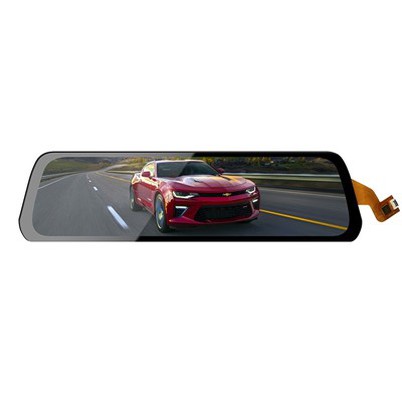
Modern vehicles integrate TFT LCD Touch Screen systems into dashboards, infotainment systems, and control interfaces. These screens must withstand vibration, temperature variation, and long-term usage.
Smart Retail and Kiosks
Retail and kiosk systems use large TFT LCD Touch Screens for interactive advertising, self-service ordering, and customer engagement systems.
Consumer Electronics
Smartphones, tablets, laptops, and smart home devices rely on TFT LCD Touch Screen technology for user interaction. These applications demand thin, responsive, and high-resolution display systems.
Conclusion
TFT LCD Touch Screen technology has become a fundamental component of modern electronic systems, combining high-quality visual output with intuitive touch interaction. Its structure integrates display panels, touch sensors, and controller systems into a unified interface that supports real-time human-machine communication.
From capacitive and resistive technologies to IPS displays and high-brightness outdoor solutions, TFT LCD Touch Screen systems continue evolving to meet the growing demands of industrial, automotive, medical, and consumer markets.
As technology advances, future developments will focus on thinner structures, higher integration levels, improved optical performance, and stronger environmental durability. For OEM manufacturers and system designers, understanding the structure, working principles, and application requirements of TFT LCD Touch Screen technology is essential for building competitive and reliable products in 2026 and beyond.