
How Capacitive Touch Foil Film Works: Structure, Principle, and Applications (2026 Complete Guide)
Leave a message
Introduction
In 2026, interactive display technology is no longer limited to traditional touch panels embedded inside consumer devices. Large-format interactive systems, transparent smart glass, industrial HMI interfaces, and digital signage are increasingly adopting a more flexible and scalable solution: Capacitive Touch Foil Film.
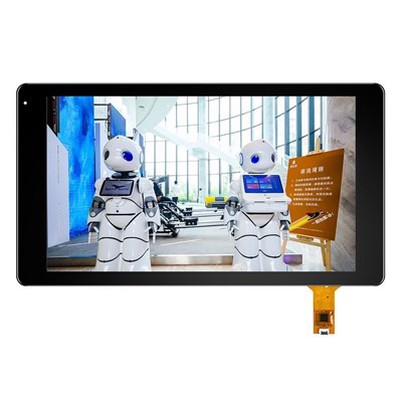
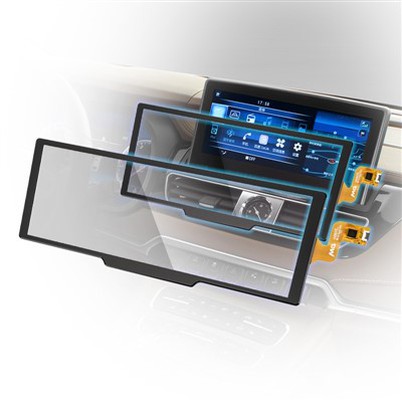
A Capacitive Touch Foil Film is an ultra-thin, transparent touch sensor layer that can be applied directly onto glass or display surfaces to enable touch functionality. Unlike conventional capacitive touch panels that require full laminated structures, touch foil film can transform existing flat surfaces into interactive screens without significantly changing mechanical design.
This flexibility is one of the main reasons Capacitive Touch Foil Film has gained strong adoption in smart retail, public kiosks, industrial control systems, education platforms, and architectural smart glass installations. It allows manufacturers and system integrators to upgrade non-touch displays into interactive systems at relatively low cost and with minimal structural modification.
At the same time, the rise of large TFT LCD Display systems and LED signage has created new demand for external touch solutions. Instead of redesigning the entire display module, integrators can simply add a Capacitive Touch Foil Film layer to achieve multi-touch functionality, gesture control, and interactive user experience.
This guide provides a complete technical and application-level understanding of Capacitive Touch Foil Film technology in 2026, including its structure, working principle, installation methods, system integration, and industry applications.
What Is Capacitive Touch Foil Film and How It Works
Definition of Capacitive Touch Foil Film
A Capacitive Touch Foil Film is a transparent, flexible touch sensor composed of conductive layers arranged in a grid pattern. It is typically made from PET (polyethylene terephthalate) film or similar flexible substrate materials coated with transparent conductive materials such as ITO (Indium Tin Oxide) or metal mesh.
Its main function is to detect touch input and convert it into electrical signals that can be processed by a controller IC. Unlike traditional embedded touch panels, Capacitive Touch Foil Film is externally applied to glass or display surfaces, making it highly versatile for retrofit applications.
It is widely used to convert TFT LCD Display screens, projection surfaces, and glass panels into interactive touch systems without redesigning the internal display structure.
Basic Working Principle
The working principle of Capacitive Touch Foil Film is based on capacitive sensing technology, which relies on changes in electrostatic fields.
The film contains a grid of X-axis and Y-axis electrodes that continuously generate a weak electrostatic field across the surface. When a conductive object such as a human finger touches or approaches the surface, it disturbs the local capacitance at that point.
This change in capacitance is detected by the sensor grid and converted into a digital signal. The controller IC then calculates the exact coordinates of the touch point.
The system processes these signals in real time, enabling smooth interaction such as tapping, dragging, zooming, and multi-finger gestures.
Because Capacitive Touch Foil Film does not require physical pressure, it supports highly responsive and durable touch performance, especially when combined with large TFT LCD Display or LED screens.
Human Interaction Process
When a user interacts with a Capacitive Touch Foil Film system, the process occurs in several fast stages.
First, the user's finger approaches or touches the surface of the film. This causes a localized change in the electrostatic field.
Next, the electrode grid detects the variation in capacitance and sends raw signal data to the touch controller IC.
The controller then processes the data, filters noise, and calculates precise X-Y coordinates.
Finally, these coordinates are transmitted to the operating system or display controller, which executes the corresponding action on the TFT LCD Display or connected system.
This entire process typically happens within milliseconds, enabling smooth real-time interaction.
Structure of Capacitive Touch Foil Film
Main Layer Composition
The structure of Capacitive Touch Foil Film is designed for both transparency and sensitivity.
The top layer is a protective coating that improves durability and scratch resistance. Below it is a transparent conductive layer, usually made of ITO or advanced nano-metal mesh materials.
This conductive layer is patterned into a grid structure that forms the sensing matrix. The grid is responsible for detecting changes in capacitance across the surface.
The base layer is typically made of flexible PET film, which provides mechanical stability and allows easy installation onto flat glass or TFT LCD Display surfaces.
An adhesive layer is used to attach the foil film securely to the display or glass surface without affecting optical clarity.
Electrode Grid Design
The electrode structure is the core of Capacitive Touch Foil Film technology.
It consists of intersecting X-axis and Y-axis conductive lines that form a matrix. Each intersection point acts as a potential sensing node.
When a touch occurs, the system identifies the exact node where capacitance changes, allowing precise localization.
Modern designs use high-density electrode patterns to improve resolution, accuracy, and multi-touch performance. This is especially important for large-format applications such as interactive TFT LCD Display walls or digital signage systems.
Controller Integration
The touch controller IC is responsible for interpreting signals from the foil film.
It performs tasks such as signal amplification, noise filtering, and coordinate calculation. It also manages multi-touch tracking and gesture recognition.
The controller communicates with external systems through interfaces such as USB, I2C, or UART.
In many industrial systems, the Capacitive Touch Foil Film controller is directly integrated with TFT LCD Display control boards, enabling seamless interaction between touch input and display output.
Optical Characteristics
One of the key advantages of Capacitive Touch Foil Film is its high optical transparency.
Most modern designs achieve over 90% light transmission, ensuring minimal impact on display brightness and clarity.
Low haze and high transparency are critical when used with TFT LCD Display systems, as they preserve image sharpness and color accuracy.
Advanced materials such as nano-silver wire or metal mesh are increasingly used to replace traditional ITO, improving transparency and flexibility while maintaining conductivity.
Working Principle of Capacitive Touch Foil Film Systems
Electrostatic Field Formation
Capacitive Touch Foil Film operates by maintaining a stable electrostatic field across its electrode grid.
Each intersection of the grid maintains a baseline capacitance value. This baseline is continuously monitored by the controller system.
The stability of this electrostatic field is essential for accurate touch detection, especially in large-scale installations.
Touch Detection Mechanism
When a finger touches the surface, it introduces a conductive element that alters the local electrostatic field.
This change reduces capacitance at the touch point. The controller detects this deviation and calculates its position by comparing it with baseline values.
The system continuously scans the entire grid, allowing it to detect multiple touch points simultaneously.
This mechanism ensures high precision and fast response, even when integrated with large TFT LCD Display systems or LED screens.
Multi-Touch Functionality
Modern Capacitive Touch Foil Film supports multi-touch interaction, enabling users to perform complex gestures.
These include pinch-to-zoom, rotation, swipe gestures, and multi-finger control operations.
Multi-touch capability is essential for interactive kiosks, collaborative workstations, and large digital signage systems.
It also enhances usability in industrial HMI systems connected to TFT LCD Display panels.
Environmental Adaptability
Capacitive Touch Foil Film systems are designed to operate in various environmental conditions.
They can maintain stable performance under changes in humidity, temperature, and lighting conditions.
However, proper grounding and controller calibration are important in industrial environments to reduce electromagnetic interference.
When properly installed, Capacitive Touch Foil Film can operate reliably in both indoor and semi-outdoor applications.
Installation and Integration of Capacitive Touch Foil Film
Surface Application Methods
One of the key advantages of Capacitive Touch Foil Film is its flexible installation process.
It can be applied directly onto flat glass surfaces or TFT LCD Display panels using dry or wet lamination methods.
Dry installation uses adhesive backing, while wet installation uses optical adhesive solutions for better clarity and bonding strength.
Edge mounting is also used in some large-format systems where full-surface bonding is not required.
Optical Bonding Compatibility
Capacitive Touch Foil Film can be combined with optical bonding systems to improve performance.
Optical bonding eliminates air gaps between layers, reducing reflection and increasing contrast.
When used with TFT LCD Display systems, this combination significantly improves outdoor readability and visual clarity.
It also enhances mechanical stability and reduces dust or moisture intrusion.
Calibration and Configuration
After installation, the system must be calibrated to ensure accurate touch detection.
This includes sensitivity adjustment, coordinate mapping, and noise filtering configuration.
In multi-screen systems, synchronization between multiple Capacitive Touch Foil Film units may also be required.
Proper calibration ensures consistent performance across different environmental conditions and usage scenarios.
Maintenance and Durability
Capacitive Touch Foil Film systems are relatively low maintenance.
The surface can be cleaned using standard non-abrasive cleaning solutions.
Because the sensing layer is embedded within protective films, it is resistant to scratches and moderate physical wear.
However, care must be taken to avoid sharp impacts that could damage both the film and the underlying TFT LCD Display or glass surface.
Applications of Capacitive Touch Foil Film
Smart Retail and Digital Signage
One of the largest application areas for Capacitive Touch Foil Film is smart retail.
It is widely used in interactive shop windows, product displays, and digital advertising screens.
Retail environments benefit from its ability to convert static glass surfaces into interactive systems without replacing the underlying TFT LCD Display.
Industrial HMI Systems
In industrial environments, Capacitive Touch Foil Film is used in Human-Machine Interface (HMI) systems.
It enables operators to control machinery through intuitive touch interfaces.
Its durability and scalability make it suitable for large control panels connected to TFT LCD Display systems in factories and automation lines.
Public Information Kiosks
Public kiosks such as ticketing machines, navigation systems, and information terminals rely heavily on touch foil technology.
Capacitive Touch Foil Film provides a durable and responsive interface suitable for high-traffic environments.
It is often paired with rugged TFT LCD Display modules for long-term reliability.
Smart Glass and Interactive Architecture
In modern architecture, Capacitive Touch Foil Film is used to create interactive glass surfaces.
Conference rooms, museums, and exhibitions use it to turn glass walls into interactive digital interfaces.
It enables a seamless blend between physical and digital environments.
Education and Collaboration Systems
Educational institutions use Capacitive Touch Foil Film in large interactive boards and teaching systems.
It supports multi-user collaboration and interactive learning experiences.
When combined with TFT LCD Display systems, it creates powerful digital classroom environments.
Future Trends of Capacitive Touch Foil Film Technology
Ultra-Thin and Flexible Structures
Future developments focus on reducing thickness and increasing flexibility.
This will enable curved and irregular surface applications.
AI-Based Touch Recognition
Artificial intelligence will improve gesture recognition accuracy and adaptive sensitivity control.
This will make Capacitive Touch Foil Film systems more intelligent and user-friendly.
Integration with Large Display Systems
The integration of Capacitive Touch Foil Film with TFT LCD Display and LED video walls will expand rapidly.
This will enable large-scale interactive environments in retail and smart cities.
Enhanced Durability and Stability
Future systems will improve resistance to moisture, dust, and electromagnetic interference.
This will further expand industrial and outdoor applications.
Conclusion
Capacitive Touch Foil Film has become a key enabling technology for modern interactive display systems. Its ultra-thin structure, flexible installation, and high transparency make it ideal for transforming ordinary glass and TFT LCD Display surfaces into responsive touch interfaces.
By combining capacitive sensing principles with advanced materials and controller technology, it delivers fast, accurate, and multi-touch interaction across a wide range of applications.
From smart retail and industrial HMI systems to public kiosks and architectural installations, Capacitive Touch Foil Film is reshaping how users interact with digital environments.
In 2026 and beyond, its integration with TFT LCD Display systems, AI-driven interaction models, and large-scale transparent surfaces will continue to drive innovation in human-machine interaction technology.